In September 2003 Last.fm had a small line in the corner: 4 Members Online
. Across the page, red text promised Share taste instead of files
. A listener's taste was enough to build a radio station.
Scrub through the captures, or follow the story below.
Last.fm's homepage history from 2003 to 2026 follows what happened to that taste: it became a public profile, a source of recommendations and a record of listening that could outlast the service playing the songs. These 23 homepage captures trace the changing pitch, from starting a station to keeping your musical past.
2003–2005 A record collection without the files
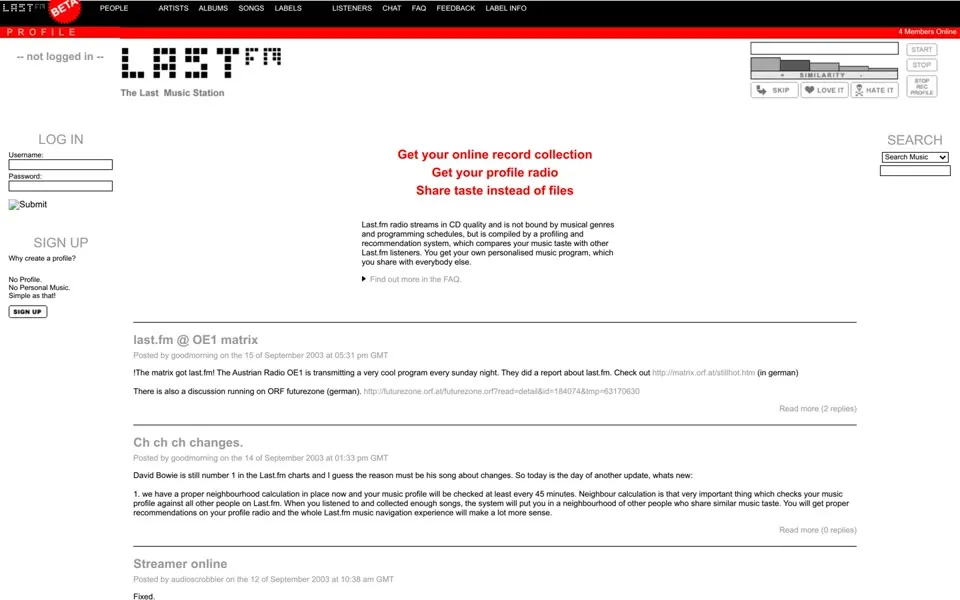
Last.fm's 2003 homepage offers routes through people, artists, albums, songs, labels and listeners, alongside chat, frequently asked questions, feedback and label information, while the news below covers profile calculations, player controls and the stations carrying the radio. The page explains that its radio compares your taste with other listeners' tastes to make a personal program. The four people online are a momentary headcount. Last.fm dates its first streamed track to 2002; our usable homepage sequence begins in September 2003.[14]
The news column shows the machinery being adjusted. A September update says profiles will be checked at least every 45 minutes so the site can find musical neighbors. Another item discusses player controls. The homepage is partly an explanation of the radio and partly a running conversation about how to make it work.
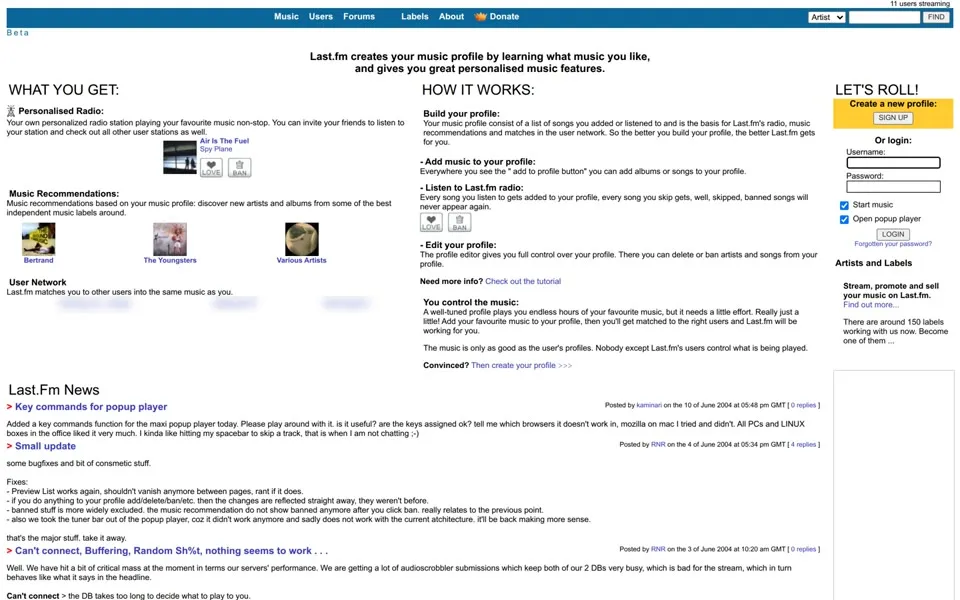
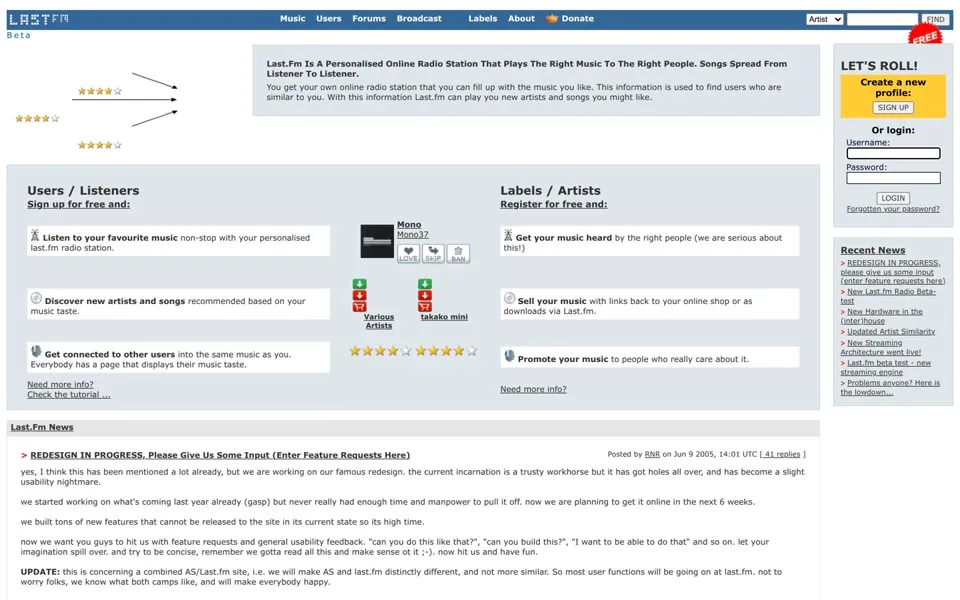
By 2004 the explanation has two columns: what you get and how it works. The 2005 page separates listeners from labels and artists around a sample player, recommendation examples and news. A label can upload; a listener can join. Both routes lead back to the same collection of listening habits.
The December 2003 profile of RJ, Richard Jones, supplies the other half of the homepage pitch: songs, artists and a place among friends and neighbors, beside a registration line dated November 20, 2002, and a biography about developing Last.fm and Audioscrobbler.
2006–2007 Type an artist, start listening
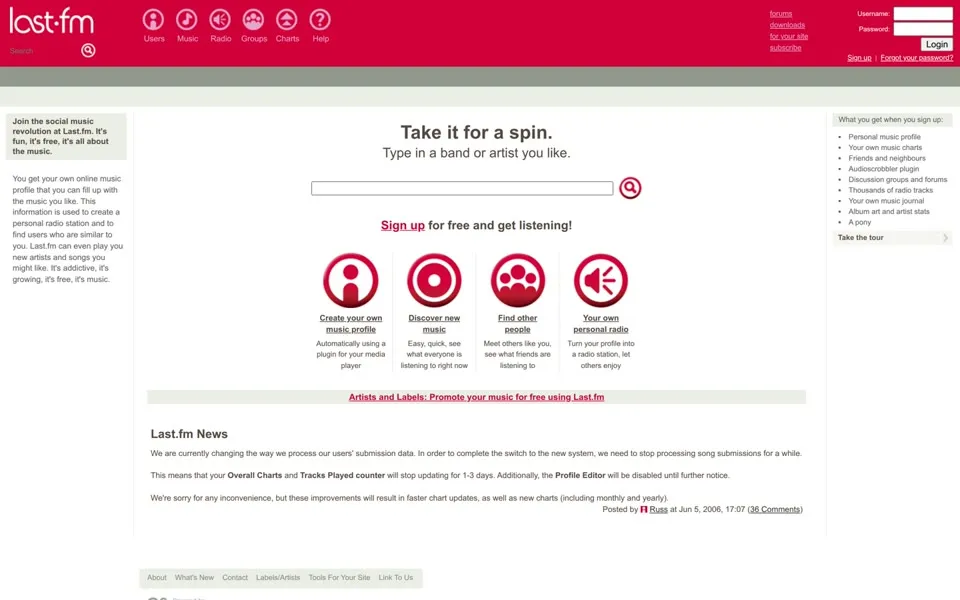
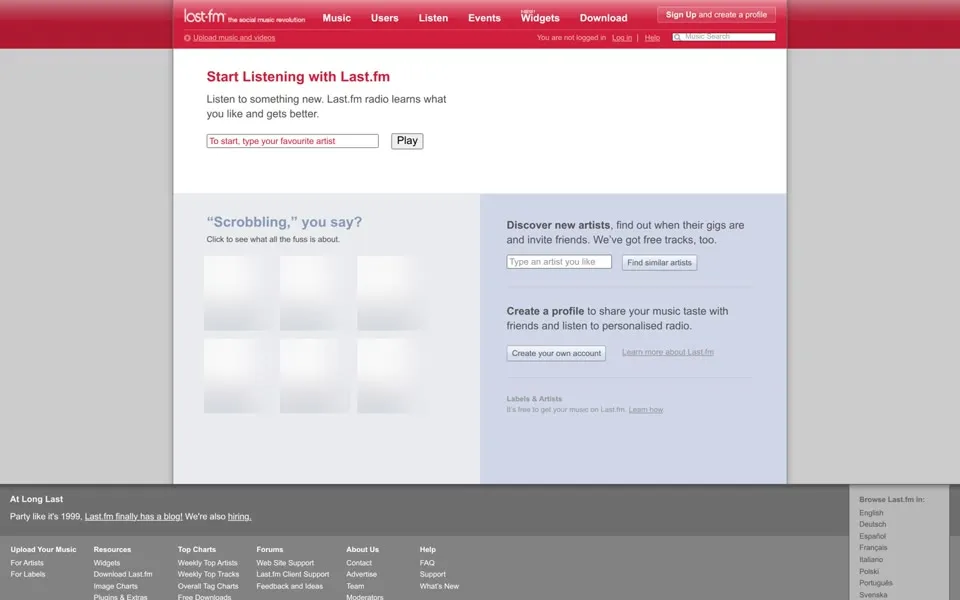
Last.fm's 2006 homepage gives the visitor something to do immediately: type an artist into the search box. Four pink symbols explain the next steps under a heading about signing up for the real experience. News still fills the lower page, but a visitor can try the music before reading it. Its signup list ends with A pony
.
CBS bought Last.fm for approximately $280 million on May 30, 2007.[1] The announcement on the company's blog ended with plans for a Vietnamese lunch and more work on its Facebook application.[2] The homepage from June keeps its attention on getting someone listening.
Its next task is explaining a strange verb. The 2007 page introduces scrobbling above member cards whose avatars are missing in this replay: listening elsewhere can feed a Last.fm profile. The artist box gets a new visitor started; the profile gives that visitor somewhere to come back to.
RJ’s January 2006 profile gives that listening record a visible shape: recent tracks, recent journals, weekly artists, all-time artists and all-time tracks sit beside a rubber-duck avatar, while friends and musical neighbors have their own sections farther down the captured page.
2008 Free music, three plays at a time
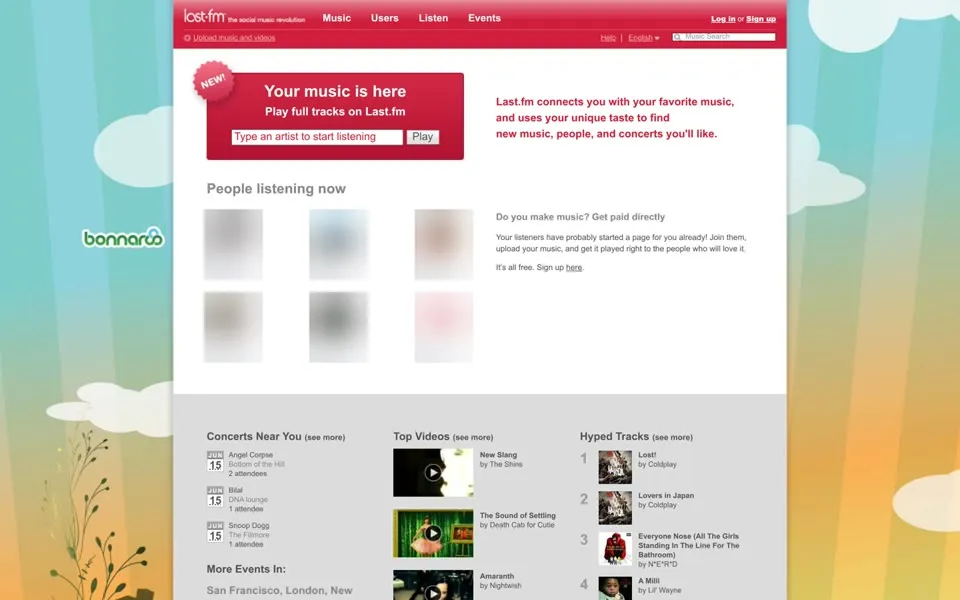
Last.fm's 2008 homepage says Your music is here
over an invitation to play full tracks. A colorful festival background wraps the page, and private listener cards sit below the listening box. Further down are concerts, music clips and charts, all competing for a place in the visitor's next listening session.
Each track initially came with three free plays. The January 23 announcement launched full tracks and albums in the US, UK and Germany; after a track's third free play, a notice would point to a planned subscription service.[3] The short homepage invitation had longer terms behind it.
More than 2,000 comments made the July redesign announcement struggle to load. Last.fm closed that discussion and directed feedback to its forum.[4] Changes to a music profile could fill a page of their own.
2009–2010 Artist search on a dark blue panel
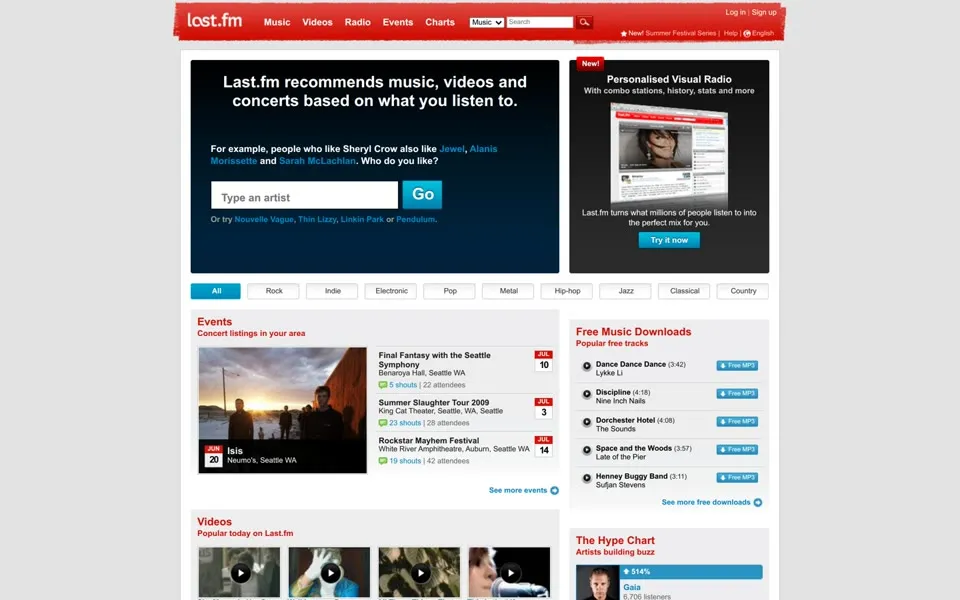
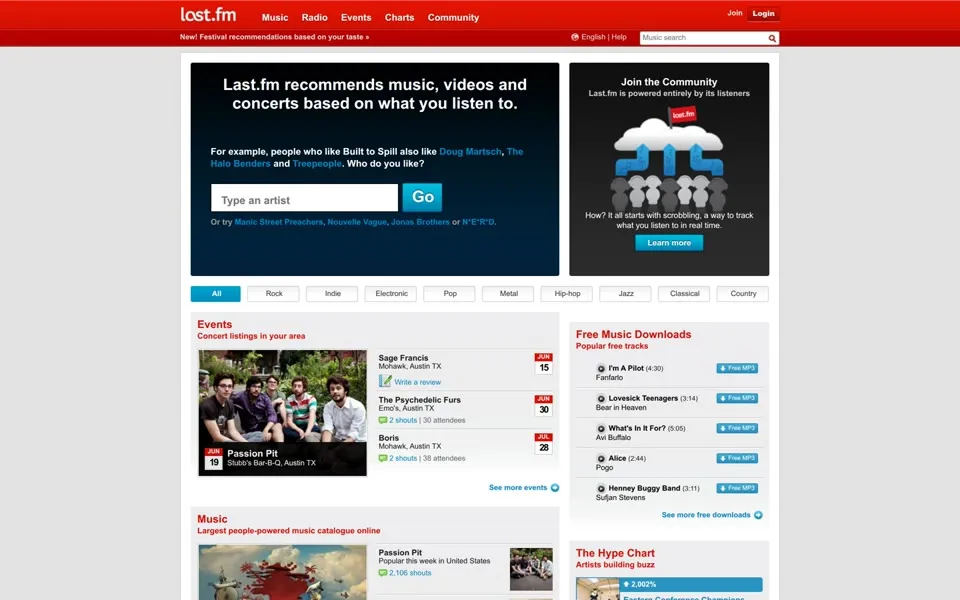
Last.fm's 2009 homepage puts a white artist field and a cyan Go button on a dark blue panel. Its recommendation pitch reaches beyond recordings to music clips and concerts. Lower down, free downloads have their own chart, beside music rankings, events and rows of performers.
Lady Gaga topped two very different Last.fm lists in 2009. The company named The Fame its Best of 2009 winner, then noted that Poker Face also put her at the top of its unwanted-scrobble chart.[5] A listening record could include a song someone wished it hadn't counted.
The 2010 homepage keeps the dark blue panel and its surrounding recommendations. Behind that familiar layout, Last.fm said in April that its own on-demand track offering would not return. Its stated focus was scrobbling, personal radio and connecting listeners to other services.[6] The useful thing to keep was the taste profile, wherever the next song came from.
2011–2012 A profile beside your phone
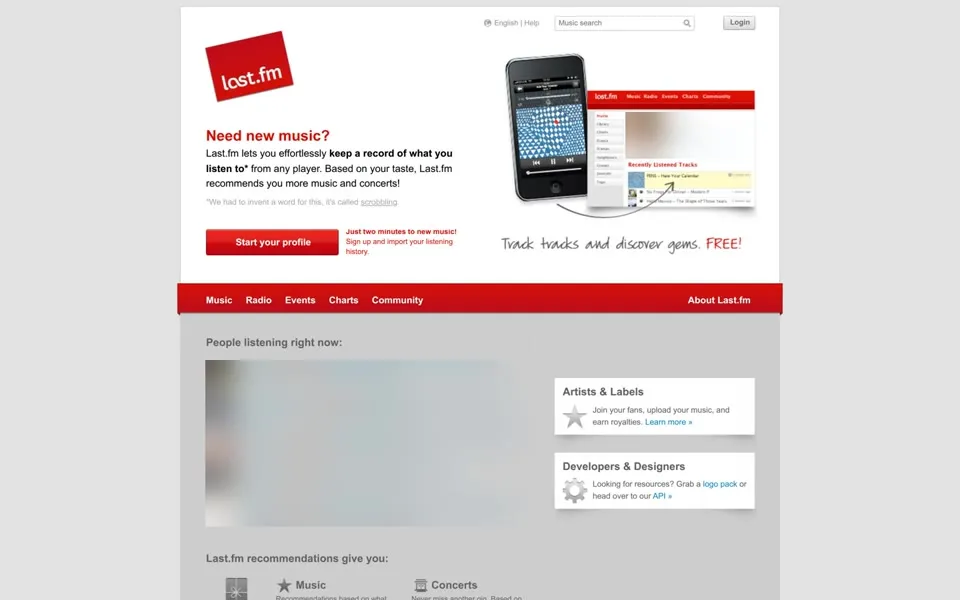
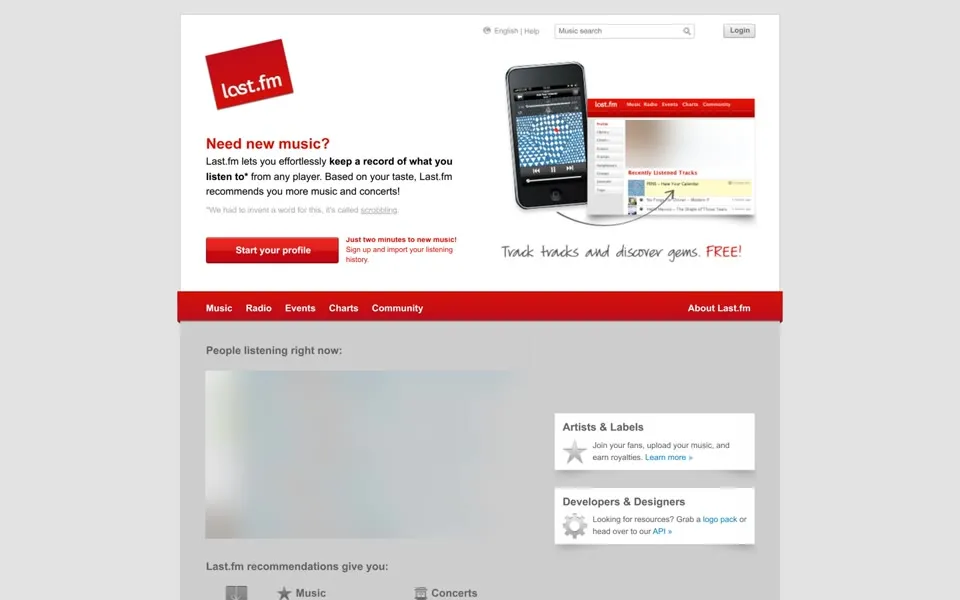
Last.fm's 2011 homepage places a phone and a profile screenshot beside its signup pitch. The pale banner gives way to red navigation, then a feed of people listening. In 2012 the same arrangement remains, with links for artists, labels and developers below the activity. A 2011 footnote explains the word behind the record: We had to invent a word for this, it’s called scrobbling.
A pause button arrived in Last.fm radio in April 2011. The blog called it a long-requested feature and included the Android and iPhone clients in the announcement.[7] The phone in the signup banner was another place where the listening record could grow.
For 2011 alone, Last.fm later reported more than 11 billion scrobbled tracks and over 71,000 years of listening time.[8] Those totals describe accumulated listening across the service. Down in the homepage feed, that activity still arrives one person and one song at a time.
2013–2014 Scrobbles, even on paper
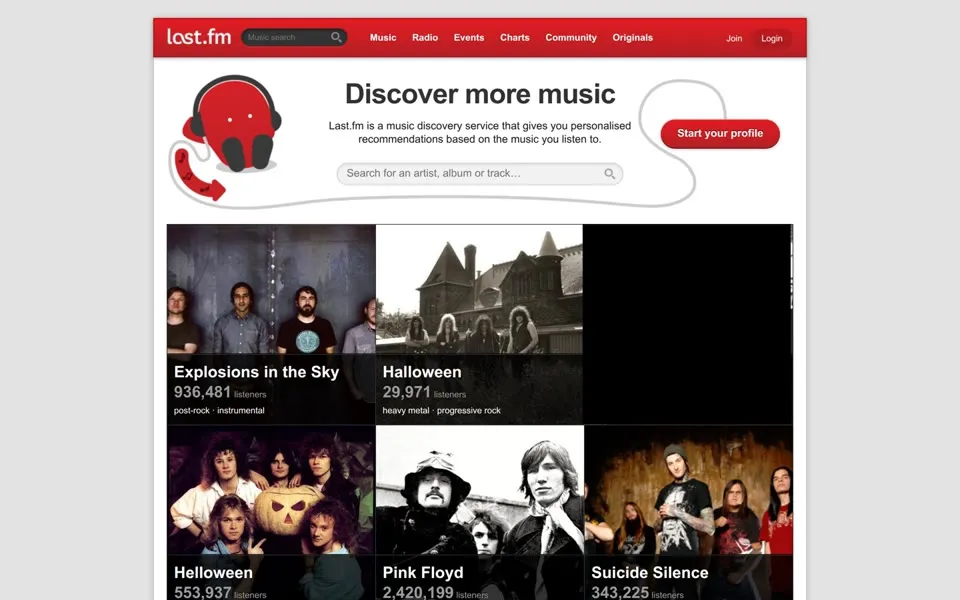
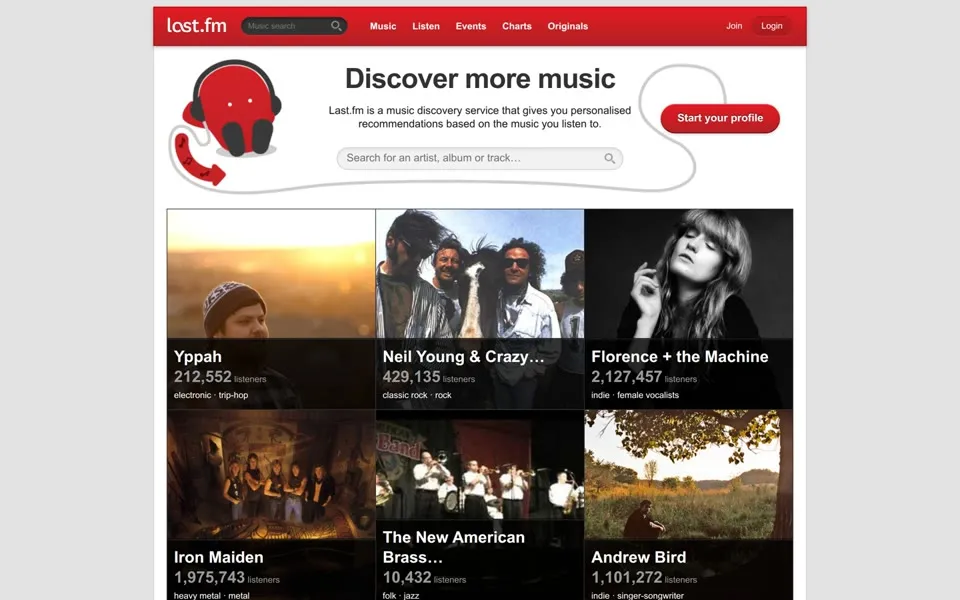
Last.fm's 2013 homepage pairs red headphones with Discover more music
. Under the artist search, a photographic grid gives each performer a listener count. The page has room for an artist you know and another you might try next.
Paper scrobbles were Last.fm's April Fools' joke in 2013. Its blog invited listeners to write down their songs and mail the sheets to Last.HQ, where a scanner, or a troop of monkeys if necessary, would enter them.[9] The joke depended on recognizing the urge to get every last listen into the record.
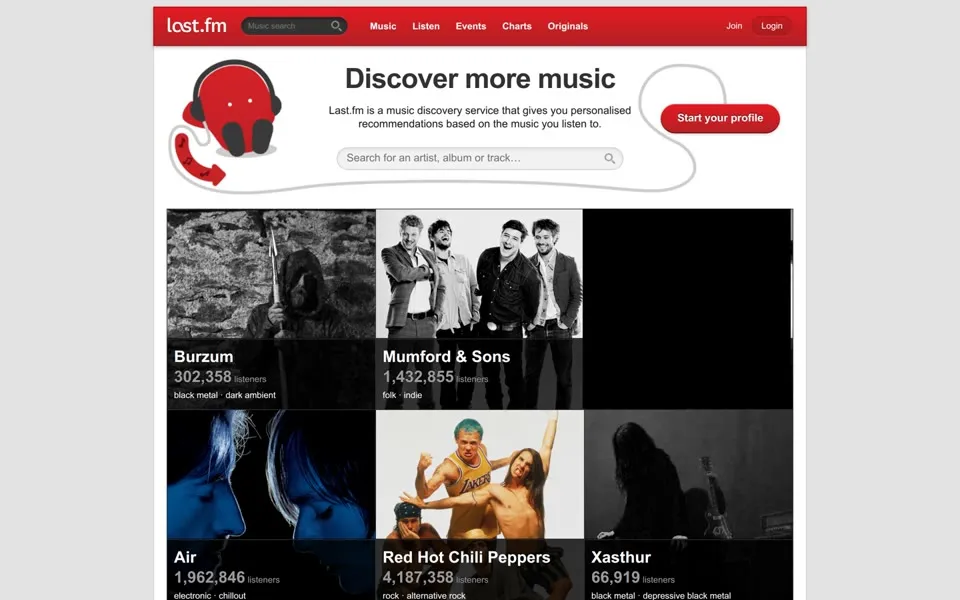
In 2014 the headphone banner stays while the artist grid changes, with Air and Red Hot Chili Peppers among the names in this capture. The upper-right tile is empty in both the 2013 and 2014 replays. The connection to other players becomes more direct: Last.fm's January Spotify integration could turn tracks on a profile, artist or album page into a Spotify playlist controlled from a bar along the bottom.[10] A Last.fm page could organize the music while Spotify played it.
2015–2016 The headphones give way to a waveform
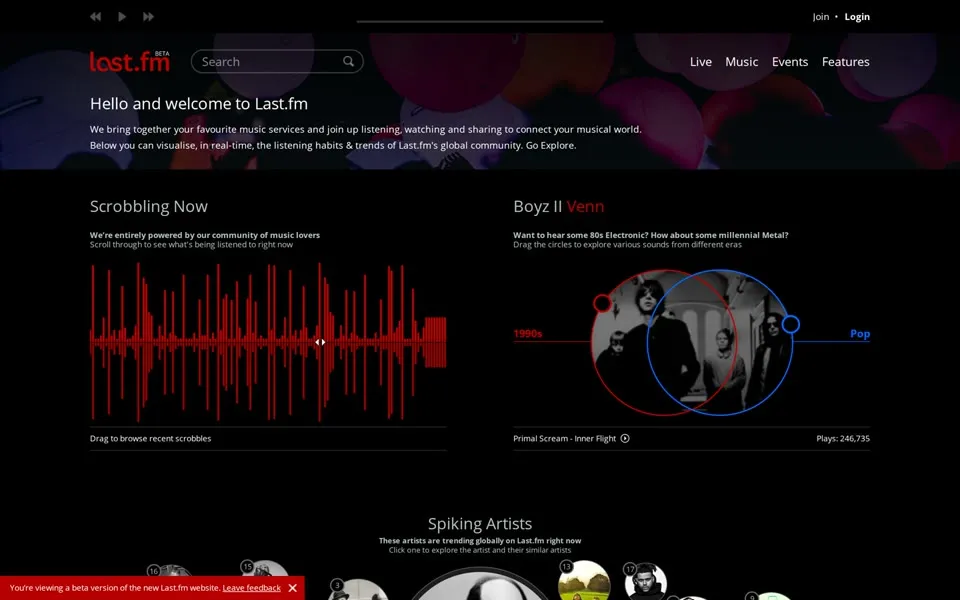
Last.fm's 2015 capture still has the red headphones and the artist grid. In the 2016 capture, a dark page replaces them with a waveform, overlapping circles and bubbles of artist portraits. A welcome banner explains that the site brings different music services together.
A petition asking Last.fm to restore the old design reached 1,000 supporters on August 18, 2015, and 2,500 on August 23.[11] These were people signing one petition; their objections give a view of the response to the change.
The new site's own welcome page promised that familiar features would return and promoted a library for revisiting particular days of listening.[12] On the homepage, individual histories now power a public display. The waveform sits under Scrobbling Now
, while the circles invite visitors to explore sounds from different periods.
2018–2024 Who is inside the biggest bubble?
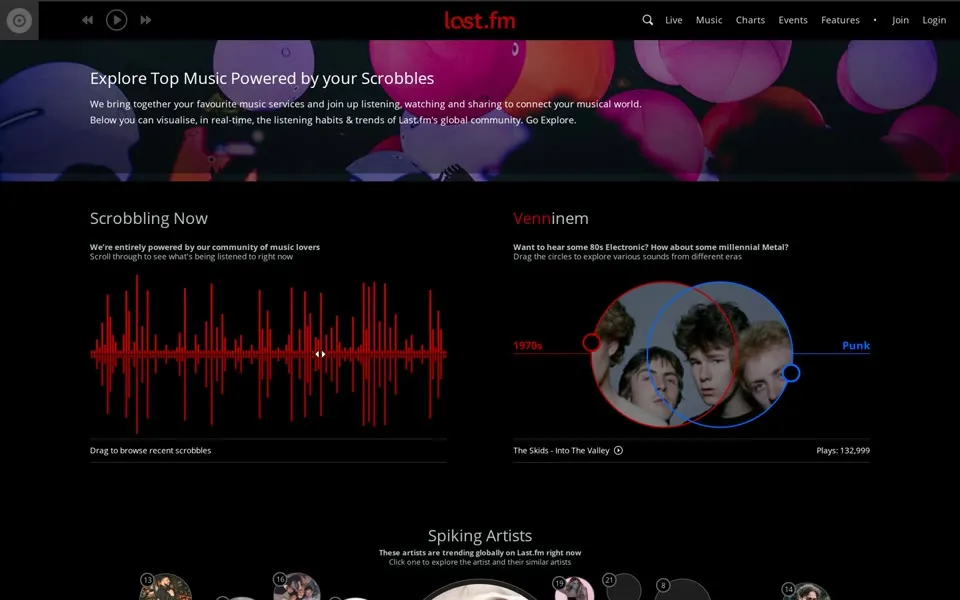
Last.fm's 2018 homepage tells visitors that their scrobbles power its top music. The waveform remains on the left, with overlapping Venn circles on the right. Below, Ariana Grande occupies the largest artist bubble, turning the community's listening into something you can scan.
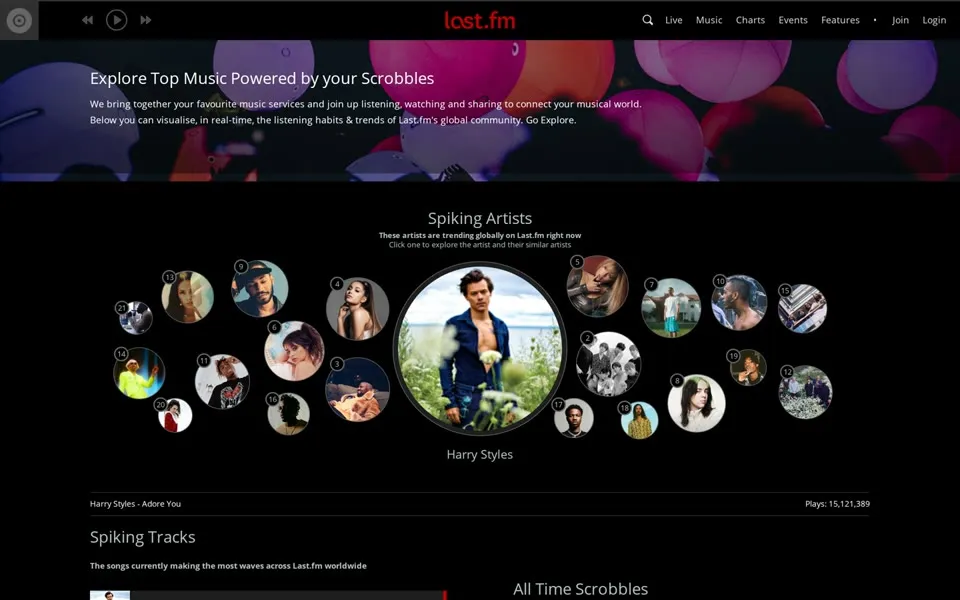
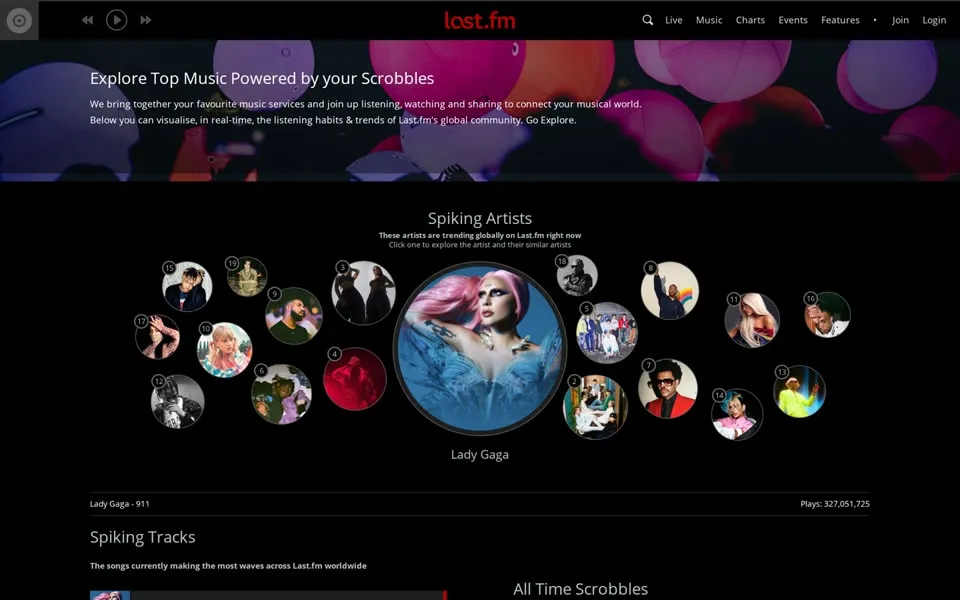
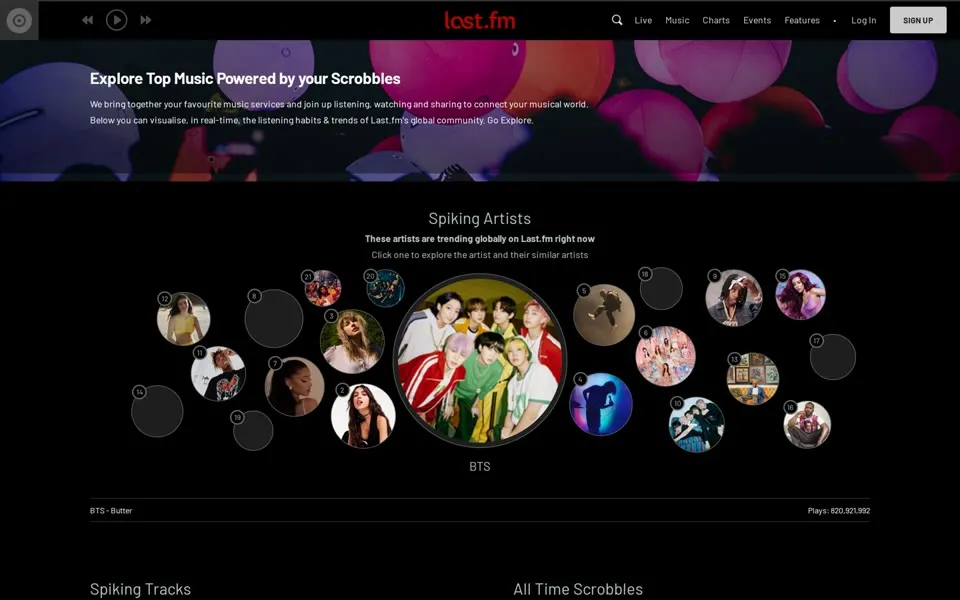
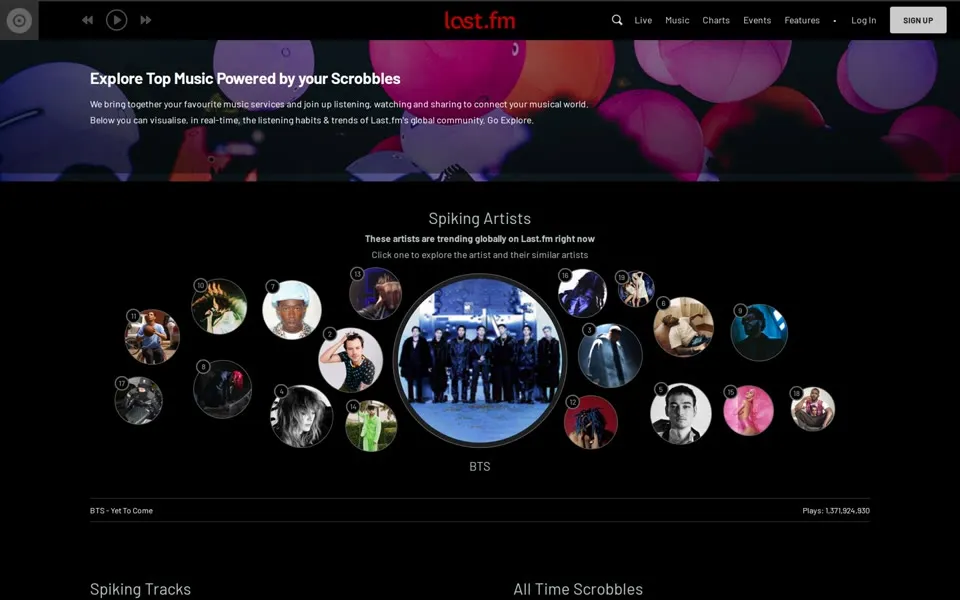
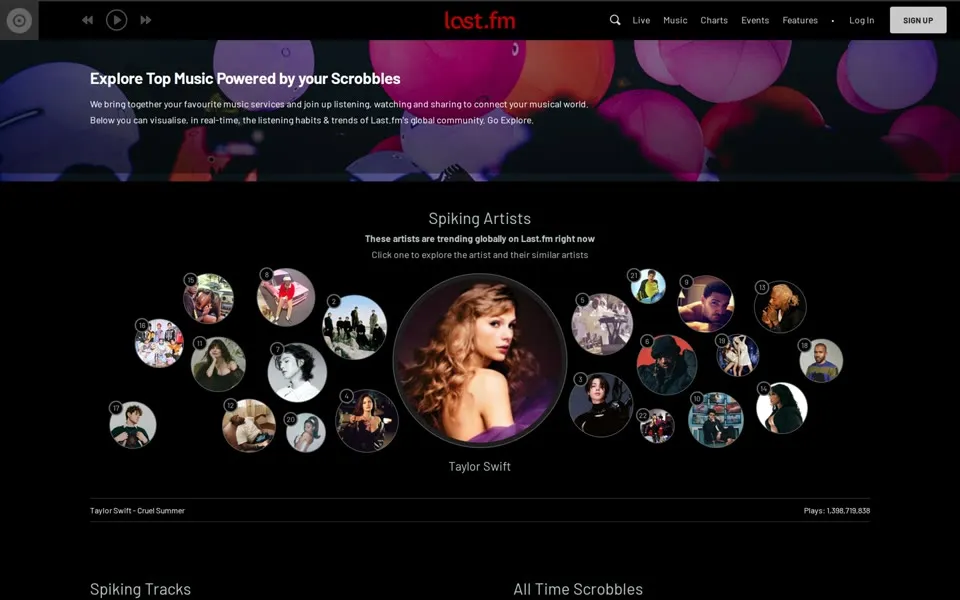
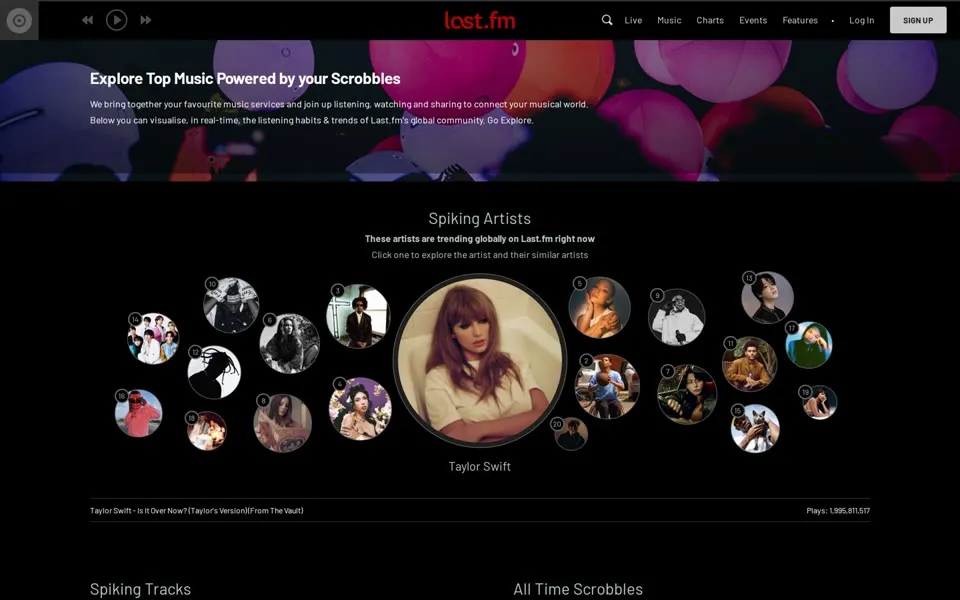
The bubbles become the first large display in our 2019 through 2024 captures. Harry Styles leads the selected 2019 frame, Lady Gaga the 2020 frame, BTS the 2021 and 2022 frames, and Taylor Swift the 2023 and 2024 frames. They are snapshots of trending artists on those dates.
The all-time scrobble counter sits below the artist display, beside track rankings. Most replays here leave it unpopulated, and the 2022 lower news carousel also fails to load; 2023 preserves a filled counter. A lower widget keeps playing with its own name: the Venn diagrams become Annie Vennox
in 2019, Venny Kravitz
in 2020, Public Vennemy
in 2021 and Venn Stefani
in 2024. The dark layout keeps asking who is being heard right now.
2025–2026 Music Counts.
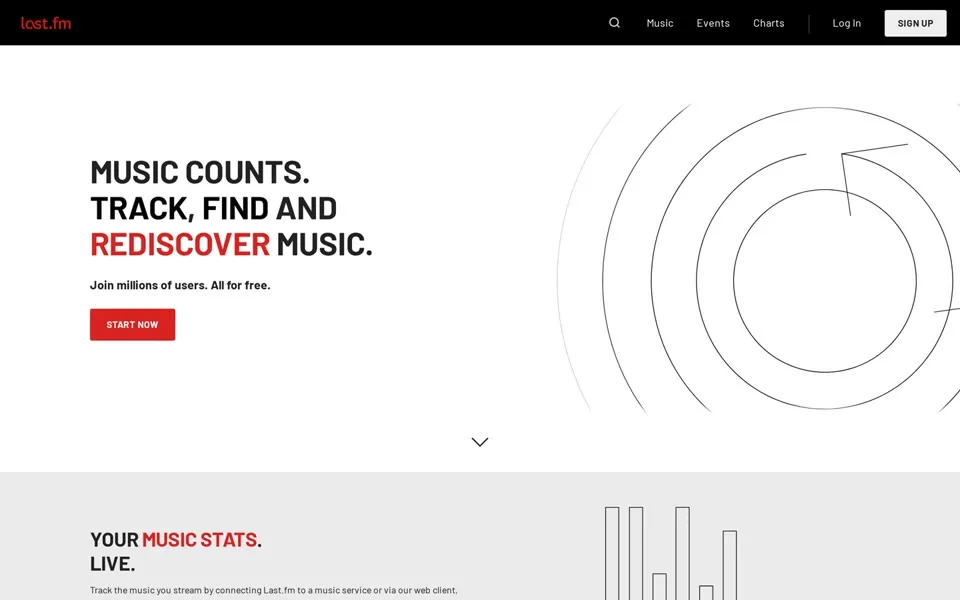
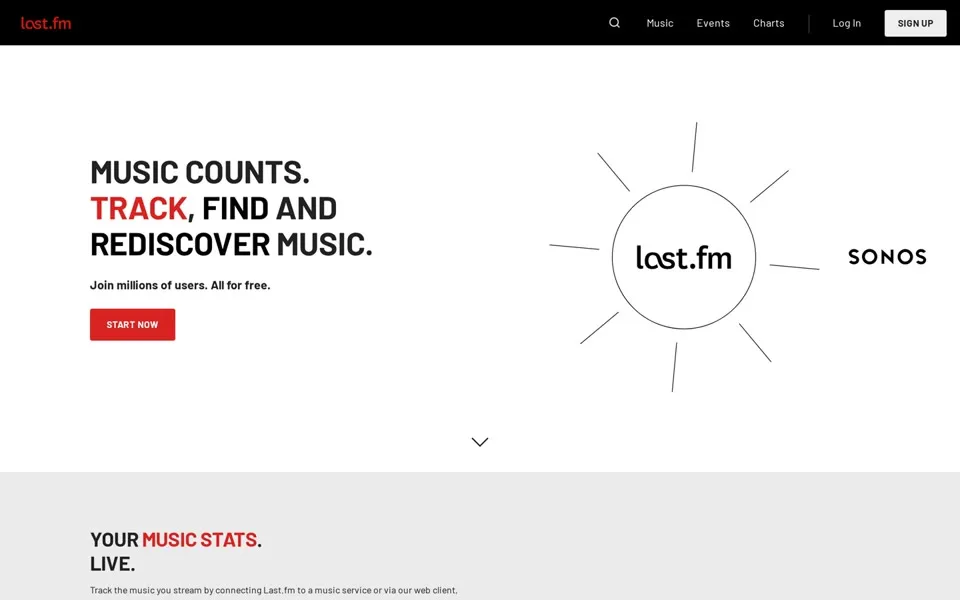
Last.fm's 2025 homepage changes to a white background and a large heading: Music Counts.
In the live October 2026 capture, the pitch continues through music stats, recommendations and rediscovering songs. Connecting a streaming service is now part of the explanation near the top of the page.
The older homepage's public trends give way to a description of your own history. The live page promises real-time statistics, weekly reports and a way to return to specific days. Its footer still links to the scrobbler and developer API. The routes into that record remain open.
Last.fm Pro says subscribers have edited more than half a billion scrobbles, in the offer read on October 18, 2026.[13] Even an automatically collected history needs corrections.
The 2003 page offered a record collection shaped by your taste. The 2026 page offers a way to open that record again, down to a day you might otherwise have forgotten.
- When was the oldest last.fm homepage in this story archived?
- The oldest capture here is from September 22, 2003, in the Internet Archive's Wayback Machine. Last.fm pairs “Share taste instead of files” with personal radio and “4 Members Online”.
- What does the last.fm homepage look like in 2026?
- In the newest capture here (live): Live Last.fm homepage, October 18, 2026: “Music Counts.”, connected services and personal listening history; artwork is mid-animation.
- How many Last.fm homepage captures does this story show?
- 22 Wayback homepage replays from 2003–2025, plus one live-site homepage captured on October 18, 2026. There are 23 selected homepage captures in total; 2002 and 2017 are excluded.
- How did the Last.fm logo change on its homepage?
- The logo evolution below shows 4 logo versions we picked from the captures, from 2003, 2006, 2009 and 2018. Logos from before 2003, the first capture, aren't included.
 2003White pixel lettering introduces the Last.fm name.
 2006A thin, rounded lowercase wordmark replaces the pixel lettering.
 2009Thicker white strokes give the lowercase wordmark more weight.
 2018Red replaces white while the rounded letter shapes remain.
Each logo is cut from that year's homepage capture (the year is the capture's); click one to see it on the page. Logos from before the first capture (2003) aren't shown, and some are missing where the logo images don't render in our captures. More logo histories.
◀ drag ▶20032026
The oldest capture in this story (2003) over the newest (2026). Drag across the picture.
Sources
Homepage wording and layouts come from the dated captures shown here. Open a screenshot for its full page and source link. The final homepage was captured from the live site on October 18, 2026.
- CBS, 2008 Form 10-KThe May 30, 2007 acquisition of Last.fm for approximately $280 million.
- Last.fm acquired by CBSCompany announcement, May 30, 2007; lunch and Facebook application plans.
- Free the MusicJanuary 23, 2008: launch territories and the three-play limit in the initial beta.
- Last.fm: The Next GenerationJuly 17, 2008: redesign and the update closing its comments.
- Happy Christmas from Last.fmDecember 21, 2009: Lady Gaga, The Fame and unwanted scrobbles.
- The artist feedback loopApril 21, 2010: its own on-demand offering and the focus on scrobbling and partners.
- Last.fm now supporting tea breaksApril 13, 2011: radio pause on the web, Android and iPhone.
- Building Best of 2011January 16, 2012: the previous year’s tracks and accumulated listening time.
- Announcing Last.fm UnpluggedApril 1, 2013: an April Fools’ announcement about handwritten, mailed scrobbles.
- Did someone say on-demand?January 29, 2014: Spotify playlists and the playback bar.
- Remove the last.fm Beta Website DesignPetition updates record 1,000 supporters on August 18, 2015, and 2,500 on August 23.
- Welcome to the new Last.fmThe new site’s library and its promise of returning features.
- Last.fm ProRead October 18, 2026: the site’s claim of more than 500 million subscriber edits.
- Last.fm Radio AnnouncementMarch 24, 2009: the company dates its first streamed track to 2002.
How this was made. One selected homepage per included year: 22 Wayback replays from 2003–2025 and a live-site capture from October 18, 2026. The archive returned 2003 for the attempted 2002 capture, so it is excluded. Neither of two tested 2017 replays populated the main widgets, so that year is also excluded.
The 2004 header logo and other images did not replay; several later counters remain unpopulated. The lower news carousel is missing in 2022, some animated artwork is missing in 2025, and 2026 illustrations are caught mid-animation.
Selected consent banners and the later sticky playback bar were hidden. Private members' identifying details are blurred.
Full-page views retain the captured height, up to 2,700 CSS pixels, and can stop before the original footer. This is a sample of the page over time; capture dates do not establish launch dates.
Two archived RJ profile captures, December 2003 and January 2006, form a separate side track. We also scouted 2008, 2012, 2016 and January 2026, but a shared Wayback cooldown prevented final captures of those eras. One profile image failed to load during throttling in 2006; private member details are blurred.
PageRewind is independent and not affiliated with Last.fm. Last.fm and its logo belong to their respective owners.
 YouTube homepage history
 Spotify homepage history
 Napster homepage history